Aging-in-place safety is easier to evaluate as a route than as a collection of rooms. Start at the bed, follow the path to the bathroom, kitchen, favorite chair, exterior door, and back again. This exposes the transitions where a capable person can still run into trouble: a dark hallway, a loose rug, a thermostat that is hard to read, or a meal that requires reaching over a hot burner.
The controls angle matters because homes increasingly contain equipment that can be adjusted by zone. ACHR News recently described advancing VRV technology in its report on flexibility, efficiency, comfort, and control. That story addresses office applications, but its central themes offer a useful residential lesson: controls should match how a space is actually used. For an older adult, that means making essential routes comfortable and understandable without turning the house into a maze of apps, remotes, and schedules.
Route 1: Bed to bathroom
Walk this route in socks, shoes, and bare feet. Look for curled rug edges, electrical cords, narrow passages, and furniture that invites someone to steady themselves on an unstable surface. Confirm that the floor remains clear when closet and bathroom doors are open.
Test lighting from the bed. The person should be able to illuminate the route before standing. Check that switches are reachable, bulbs work, and glare does not hide changes in floor level. In the bathroom, verify that grab bars are firmly anchored, the toilet is easy to approach, and the shower surface has dependable traction. A towel bar is not a substitute for a grab bar.
Route 2: Bedroom to kitchen
Follow the path used for breakfast, drinks, and medications. Remove trip hazards and make sure the kitchen has enough task lighting to read labels and appliance controls. Frequently used dishes and ingredients should sit between knee and shoulder height so routine meals do not require a step stool or deep bending.
Review how medications are stored and organized, but do not change doses or schedules without the appropriate clinician or pharmacist. The practical household job is simpler: keep the current list, organizer, instructions, and refill information together. Check whether similar containers are easy to confuse and whether labels can be read under the available light.
Run a basic meal test. Can the person safely open packaging, carry a drink, operate the microwave or range, and clean up afterward? Keep a few familiar meals available that require limited lifting and preparation. Check smoke and carbon monoxide alarms according to their manufacturer instructions, especially when cooking equipment or fuel-burning appliances are present.
Route 3: Living area to thermostat
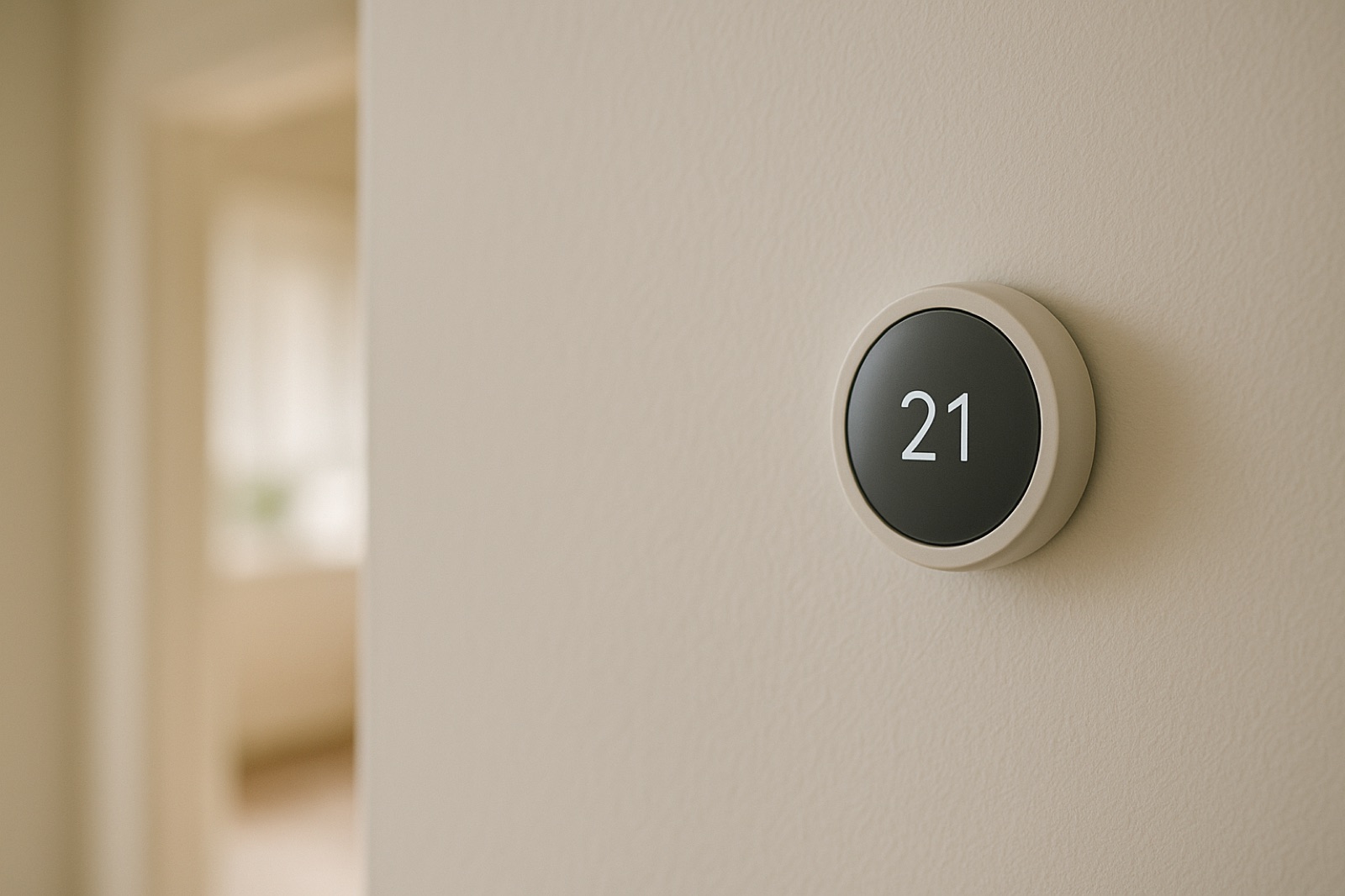
Comfort controls should be legible and predictable. Verify the thermostat clock, heating and cooling mode, temperature setpoints, fan setting, and schedule. Label unfamiliar buttons with removable, plain-language notes. If a smart thermostat is used, make sure the person can still operate it locally when a phone is unavailable.
Inspect supply registers and return grilles along the occupied part of the house. Furniture, curtains, and stored boxes should not block airflow. Listen for equipment that cycles without maintaining the set temperature. A service problem should be diagnosed by an HVAC technician, but a family member can document the time, thermostat reading, outdoor conditions, and rooms affected.
Route 4: Chair to exterior door
Test the path used to collect mail, greet visitors, or reach a porch. Check thresholds, railings, steps, footwear storage, and the location of keys. Exterior lighting should cover the landing and lock without forcing someone to cross a dark area to reach the switch.
Also test the wandering response plan when memory or orientation is a concern. Confirm that family contact information is easy to find, doors and alarms operate as intended, and responders know which exits are commonly used. Avoid improvised locking arrangements that could interfere with emergency escape.
Decide where another person would help
A safe layout cannot perform every daily task. Nonmedical home care may help when the house is workable but meals, bathing setup, laundry, reminders, companionship, or routine supervision are becoming inconsistent. Families comparing local options can find St. Louis help for aging at home and use this route test to describe the specific assistance needed.
Repeat the walk after any fall, equipment change, furniture move, or noticeable shift in daily routine. Record failed checks as concrete work orders: replace the hall bulb, secure the rug, relocate breakfast supplies, simplify the thermostat schedule, or arrange help for the morning routine.
The demand for this kind of practical checklist is visible, even if conversion data is not there yet. Homecomfortdispatch.com currently shows 2,720 page views, 1,082 visitors, 2,645 AI crawls, and 1,306 search crawls, with no assists or CRM leads yet. The useful response is not a sales pitch. It is a field-ready inspection families can complete before deciding what equipment, repairs, or human support comes next.
Readers budgeting for home upkeep may find coverage for home systems and appliances worth a look.