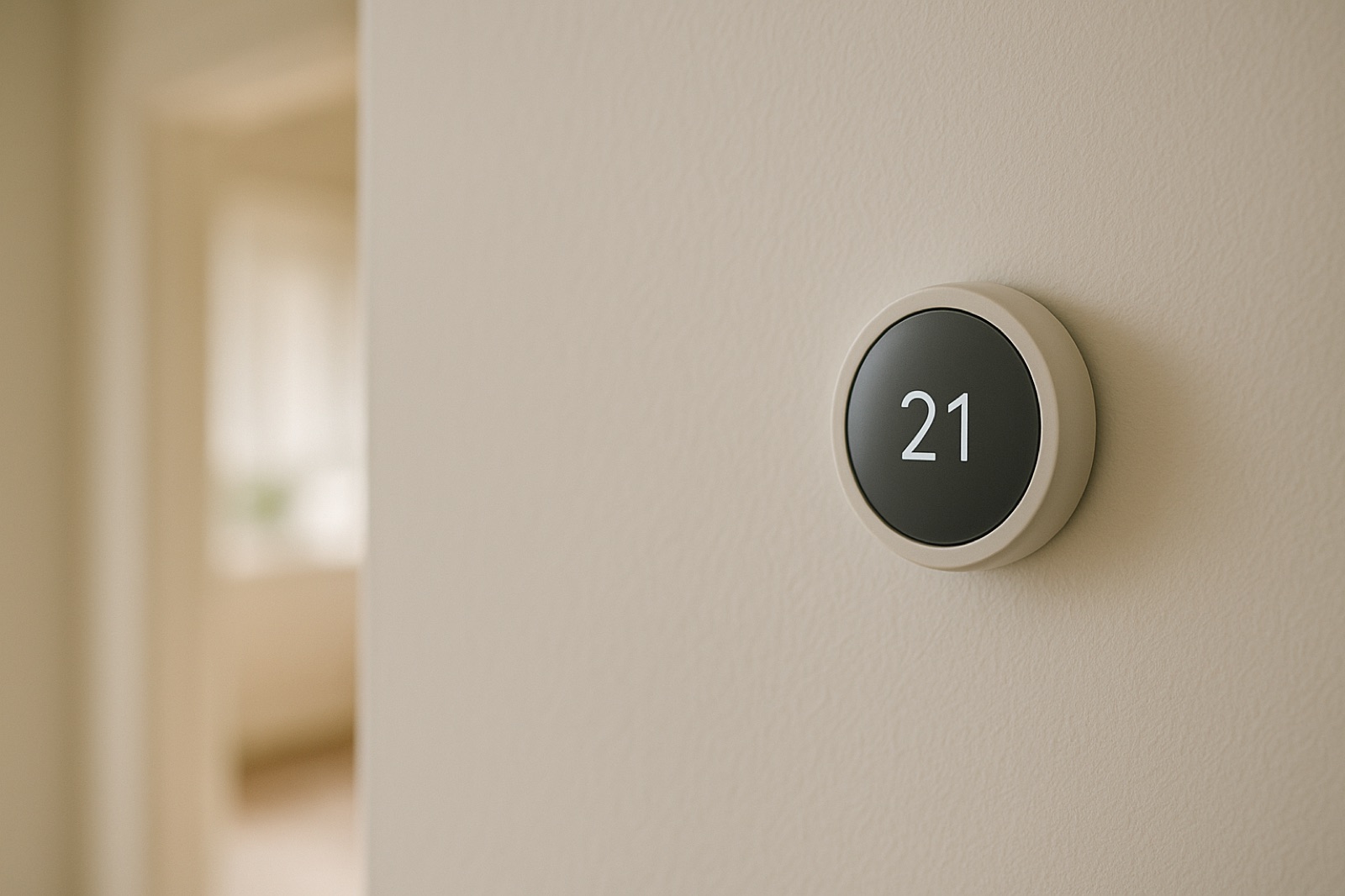
Smart controls can reveal waste that ordinary schedules miss. ACHR News recently covered research on AI-managed building HVAC energy use, reporting reductions between 15% and 27%. The residential takeaway is not that every house needs artificial intelligence. It is that observation beats assumption.
Apply that principle when an older adult wants to remain at home. Do not begin with a catalog of products. Walk the house at the times and under the conditions that expose trouble: after dark, during a shower, while carrying dinner, and when getting up at night. Treat the inspection like a service call. Identify the failure modes, test the existing safeguards, and write down who owns each correction.
Entry, stairs, and walking routes
Start outside. Check whether the address is readable from the street, the entry light reaches the lock, and the person can manage the threshold while holding a package. Look for loose rails, rocking steps, raised concrete, curled mats, and cords crossing the route.
Inside, walk the normal path between the bedroom, bathroom, kitchen, and favorite chair. Remove furniture that turns the route into a slalom. Rugs need secure backing and flat edges. Stair rails should be solid under a hard pull, not merely present. If someone steadies themselves on a towel bar, countertop edge, or door casing, record that as evidence that the route needs a proper handhold or a mobility assessment.
Lighting and electrical checks
Inspect lighting after sunset. Can every stair tread be distinguished? Can switches be reached before entering a dark room? Replace failed lamps with units of consistent color and brightness so shadows do not hide changes in floor height. Motion-activated night lights can help along a predictable route, but aim them so they do not produce glare at eye level.
A competent homeowner can also test receptacles with a plug-in tester and verify that ground-fault protection trips and resets where installed. Do not improvise repairs inside a live panel. Loose outlets, warm switches, repeated breaker trips, or damaged cords belong on an electrician's list.
Bathroom
Check the bathroom under wet conditions without creating a hazard. Confirm that the bath mat grips the floor and that the route from toilet to sink remains clear. Grab bars must be fastened into appropriate structure or an approved mounting system. A decorative towel bar is not a substitute.
Test whether hot water arrives at a predictable temperature. A sudden change may point to a control, plumbing, or water-heater issue that deserves diagnosis. Also check whether the door can be opened from outside in an emergency and whether commonly used items are reachable without climbing or deep bending.
Kitchen, meals, and medications
Move daily cookware, dishes, and food between knee and shoulder height. Check that appliance controls are readable and that smoke and carbon monoxide alarms respond to their test buttons. Look beyond whether food is available. Can the person open containers, prepare a basic meal, carry it safely, and remember to eat it?
Give medications a separate review. Record every bottle, the prescriber shown on its label, the dosing instructions, and the refill status. Remove expired over-the-counter products from the active storage area. If doses are missed or doubled, a pill organizer alone may not solve the underlying routine problem. Bring the written list and observed problems to the appropriate clinician or pharmacist.
Bedroom, exits, and wandering risk
From the bed, test the route to the bathroom with the normal nighttime lighting. Keep a phone or alert device within reach, and make sure charging cables cannot become trip lines. Check that bedding does not drag on the floor.
If the person becomes confused about doors, time, or location, inspect every exit. Door alarms and contact sensors can provide notice, but they do not supervise anyone or guarantee a response. Write down who receives an alert, how quickly that person can act, and what happens if the first contact misses it. Never block an emergency exit.
Decide what the house cannot fix
Some hazards yield to brighter lamps, a repaired rail, or rearranged cabinets. Others are gaps in human availability. If meals go uneaten, medications remain confusing, nighttime movement is unsafe, or alerts have no reliable responder, scheduled nonmedical help may be appropriate. Families comparing options can review non-medical in-home support for older adults in St. Louis and find St. Louis help for aging at home.
This checklist answers a visible information need. Home Comfort Dispatch has recorded 2,720 page views, 1,082 visitors, 2,645 AI crawls, and 1,306 search crawls, with no assists or CRM leads yet. Those figures do not prove that any particular service is needed. They support publishing a practical inspection families can use before arranging care. Finish by assigning each repair, observation, and daily task to a named person, then repeat the walk after conditions change.