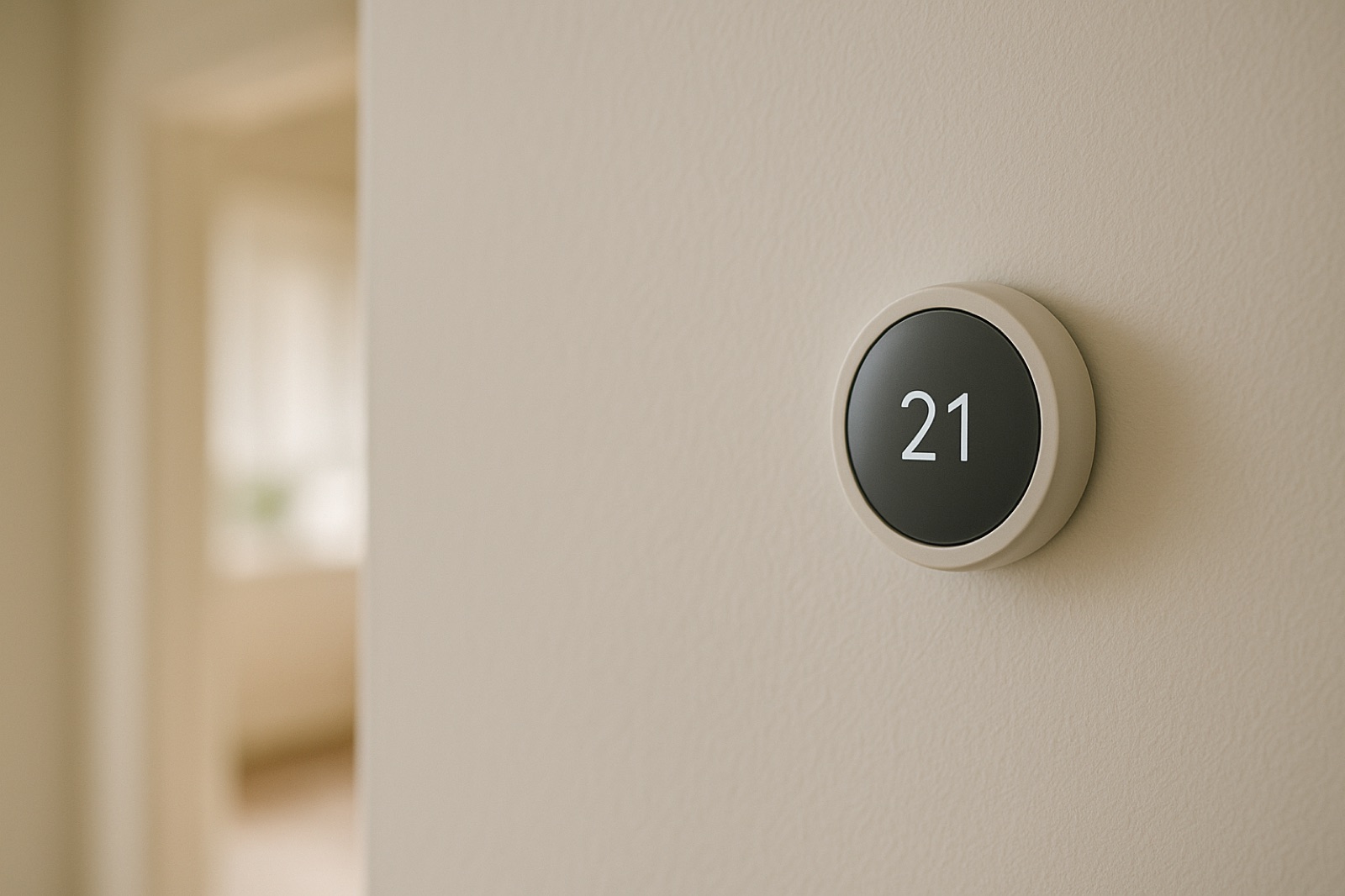
Heat pumps keep showing up in plans for new homes. A study covered by ACHR News on heat pump adoption in new construction says that "Heat pumps are gaining new ground in new-home construction," and its summary points to adoption rates approaching 50% in 2026. Read that as a builder and buyer trend line. For the owner of an existing house, the more useful question is what the electrical system can carry once the outdoor unit, the air handler, and any backup heat get added to the loads already running.
Start at the Panel Label
Open the electrical panel door and read the main breaker rating and the service label, then photograph both. Do not remove the dead front. Work inside the panel belongs to a licensed electrician, and so does any decision about service size. Your part is gathering the paper and the numbers so the electrician starts with facts instead of guesses. Note the panel brand, the bus rating if it is printed, and whether any breakers are already labeled for a dedicated load. Those details tell the electrician what kind of room exists before anyone opens a wall.
Measure the Loads You Can Reach Safely
A clamp meter shows how much current a circuit draws while it runs. Clip it only on branch conductors you can reach safely, and skip any that are cramped or hard to access. Log readings during a cold stretch, since a heat pump working hard on a bitter morning, or a resistance strip doing its share, can pull far more than it does on a mild afternoon. A single mild-day reading will understate the peak, and the peak is what the breaker actually sees. Write each reading next to its breaker number. A list of what runs on which breaker is more useful than one total, because it shows where a new load would land and which circuits are already busy.
Read the Equipment Plates
Every outdoor unit and air handler carries a data plate with electrical ratings, usually a minimum circuit ampacity and a maximum overcurrent protection value. Those two numbers drive the breaker and wire size the installer needs. Pull the same information for any electric backup heat strips in the air handler, and for the furnace if it stays in the system as a dual-fuel partner. Backup strips are often wired on their own circuit and can be the surprise on a load sheet, so check their draw as carefully as you check the compressor. Photograph every plate with a tape measure or a known object in frame so the scale and the text are both readable later.
Ask for the Load Calculation in Writing
Before you accept a quote, ask whether the installer ran a written load calculation for the house and a separate electrical load calculation for the service. A heating and cooling load calculation sizes the equipment. An electrical load calculation shows whether the panel and service have room for it. They are different documents, and a bid that covers one without the other leaves a gap. Ask what the electrical answer assumes about existing loads such as the electric range, the dryer, the water heater, and an EV charger if you have one. Get the answer on paper with your panel photos and meter log attached.
What the Adoption Trend Leaves Out
A rise in heat pump installs in new homes says something about builders and buyers. It says little about a house built before those plans existed. New construction usually starts with the heat pump already in the drawings and the electrical service sized around it. An older house arrives at that decision with a service, a panel, and a load history already in place. The trend and your breaker box are answering different questions, and only the breaker box can tell you what your house can take today.
Keep the photos, the meter log, and the plate data together in one folder. That packet shortens the next conversation with the electrician and gives you a record to measure against any bid that arrives with the phrase "no panel work needed" attached. Ask what that phrase means in amps, breaker sizes, and wire gauge. If the answer stays vague, the bid is not finished yet.