Most home safety checks happen under ideal conditions: daylight, clear floors, no television, and a rested person paying full attention. That is useful, but it is not how a house operates during breakfast, an evening bathroom trip, or a rushed medication check.
An ACHR News story about measuring and controlling sound inside Community Beer Co. offers a useful principle for aging at home. The project used acoustic measurements and targeted sound-absorbing materials to reduce reverberation. A residence is not a taproom, but the method translates: observe the environment under load, identify the specific interference, and fix the trouble spot instead of guessing.
For an aging-in-place check, turn on the television at its normal volume. Run the range hood or dishwasher. Let the HVAC blower cycle. Then walk the routes used for meals, medications, toileting, and bedtime. The goal is not to make the house silent. It is to learn whether light, sound, clutter, and controls still communicate clearly when several things happen at once.
Entry, hallways, and stairs
Start at the door used every day. Check whether the threshold catches a shoe, cane, or walker. Confirm that packages, shoes, cords, and small tables do not narrow the route. Test every light switch and replace failed lamps with bulbs that provide consistent illumination without harsh glare.
At stairs, grip the handrail and put weight on it. Look for loose carpet edges, uneven nosings, and shadows that hide the first or last step. Listen with background noise running. Can the doorbell, smoke alarm, or a family member calling from another room still be distinguished? If not, consider visual alerts, relocated devices, or reducing hard-surface echo with furnishings that do not create new trip hazards.
Living room and bedroom
Sit in the chair and bed the person actually uses, then stand without grabbing a rolling table or unstable furniture. Trace the nighttime route from bed to bathroom. It needs a reachable lamp, clear floor, secure rugs, and enough contrast to see doorways and furniture edges.
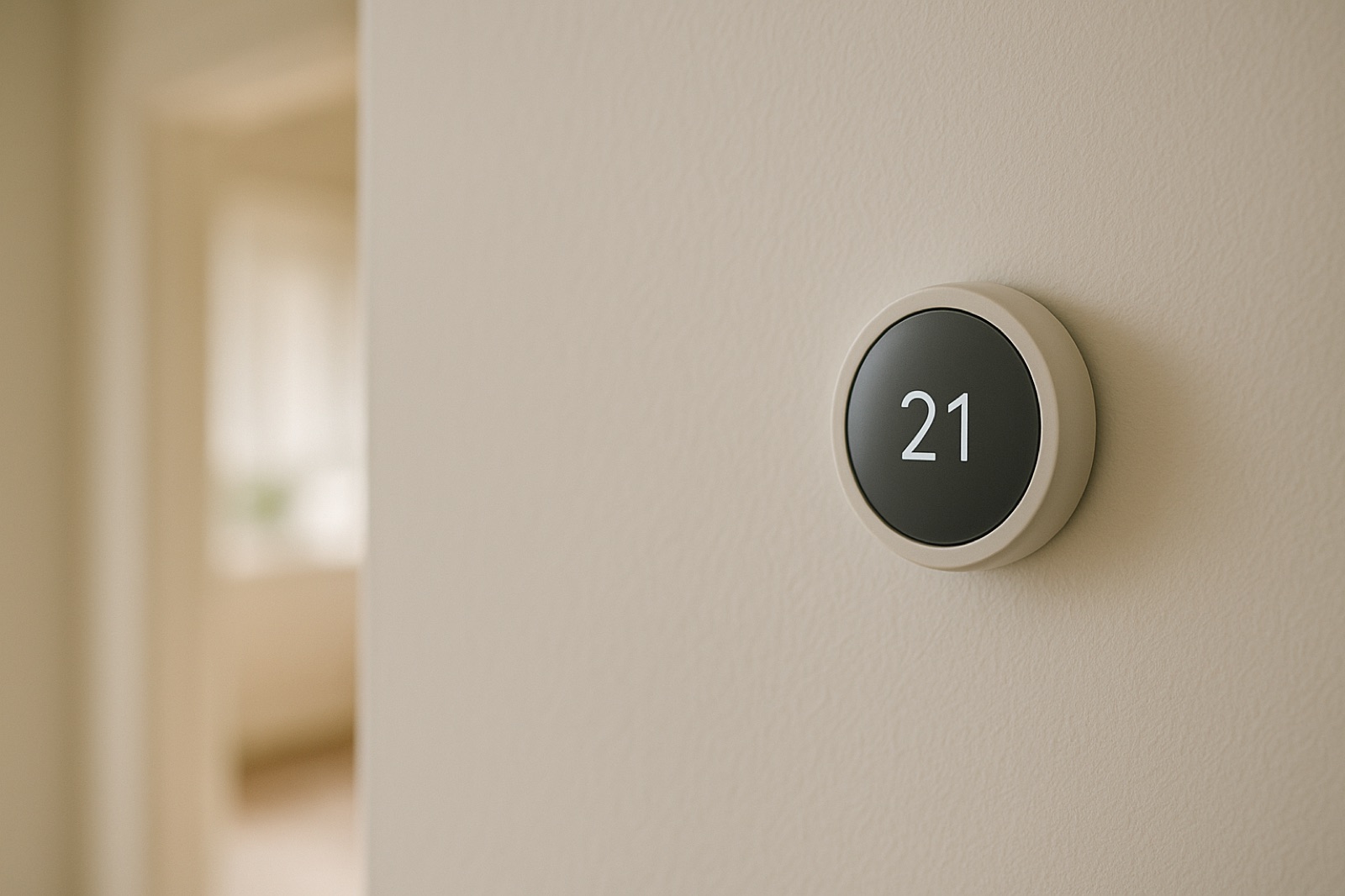
Place the phone, glasses, mobility aid, and water where they can be reached without leaning dangerously. Check whether heating and cooling controls are readable and understandable. A comfortable room matters because portable heaters, trailing fan cords, and improvised blankets can add obstacles when the main system leaves one space too hot or cold.
Bathroom
Wet the shower floor and test traction carefully from outside the enclosure first. Check grab bars for movement. A towel bar is not a substitute. Verify that the toilet height, approach space, bath mat, and shower entry fit the person using them.
Run the exhaust fan and water while speaking from the doorway. This reveals whether instructions, a timer, or a call for help can be heard over normal bathroom noise. Put frequently used items between knee and shoulder height so bathing does not require deep bending or reaching.
Kitchen, meals, and medications
Prepare one ordinary meal as a test. Can the person reach ingredients, read appliance controls, carry a hot plate, and move between counter and table without crossing clutter? Check that smoke and carbon monoxide alarms are present and operating according to their manufacturers' instructions.
Review the medication station separately from food storage. Labels need adequate light and a repeatable organization system. Remove outdated lists and duplicate containers from the working area. If doses are being missed, repeated, or confused, treat that as a supervision problem to solve with the prescribing clinician or pharmacist, not merely a need for larger labels.
Doors, exits, and wandering risk
Confirm that exterior doors open easily for an emergency while still supporting any supervision plan. Notice whether reflections, poor contrast, or several similar doors make navigation confusing. Door alerts or motion notifications may help a household recognize unexpected movement, but they do not replace a person when someone cannot safely remain alone.
Also walk the exterior route to the mailbox, car, and trash area. Check steps, railings, surface changes, lighting, and the time required to unlock the door. Repeat the test near dusk, when shadows change.
When the checklist points to help
Nonmedical home care may be worth discussing when the building can be improved but daily tasks still require prompting, standby assistance, meal preparation, companionship, or supervision. Families comparing local options can find St. Louis help for aging at home after writing down the exact tasks, times, and rooms where support is needed.
This checklist answers a visible search need, but the measurement picture is still early. Homecomfortdispatch.com has recorded 2,720 page views, 1,082 visitors, 2,645 AI crawls, and 1,306 search crawls, with no assists or CRM leads yet. Those figures show discovery activity, not proof that any checklist produced care inquiries. The practical next step is to keep the resource useful, link it to one relevant local path, and measure whether readers eventually request help.