ACHR News ran a case study on a recessed infrared heating system in Boston, which the summary describes as meeting heating and control requirements while "preserving architectural design" at a Boston development. The summary is a brief overview, so use it as a reason to think about how radiant heat is judged, not as a spec sheet. The points below apply to any infrared ceiling or wall panel you might consider for your own house.
Radiant heat warms surfaces first
An infrared emitter sends energy outward in straight lines. Anything in that path, including the floor, the sofa, the wall, and you, picks up heat directly. The air in the room warms more slowly because it is heated mostly by contact with those surfaces afterward. That is why a panel can feel comfortable in a room where a standalone thermometer reads lower than a forced-air system would have you expect. The effect is real, but it depends on where you sit and what the emitter can see.
Test comfort where you sit
Start with a simple log. Run the panel for a full warm-up period, then check the surfaces with an infrared thermometer. Read the ceiling near the emitter, the wall behind it, the floor under the chair, and the seat cushion itself. Then place a regular thermometer at seated height, roughly three to four feet off the floor, away from the panel. Write down the time, the thermostat setting, and each reading. Repeat the check on a cold morning and again in the evening. You will learn more from these notes than from one reading taken while standing under the emitter.
Check the circuit and the controls
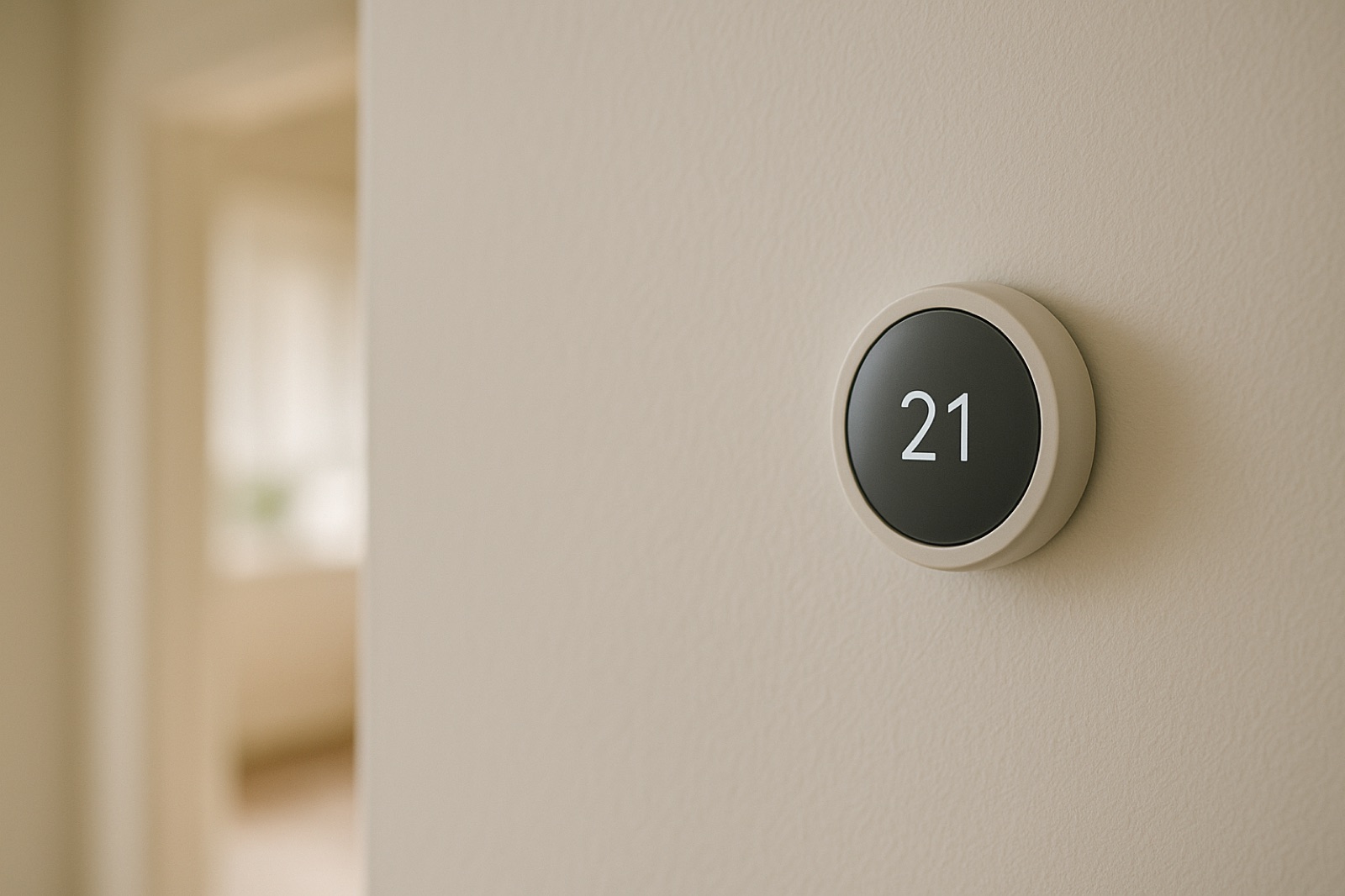
Electric infrared is a resistance load, so its draw follows its rated wattage and the voltage at the circuit. Find the nameplate on the unit and compare it with the breaker label. If you need to confirm the draw, a clamp meter on a single conductor is the tool for it, and that work belongs with the breaker off and verified dead, or with a licensed electrician if the panel is not your work. Also note where the control sensor sits. A thermostat mounted across the room from the emitter may read a different surface than the one warming your chair, and that mismatch explains many complaints about overheating or cold spots.
Keep the beam path clear
Infrared heat is blocked by what sits between the emitter and the room. Drapes hung in front of the panel, tall furniture, and decorative fixtures change where the heat lands and can make one zone warm while another stays cool. Dust on the emitter face also reduces how cleanly the unit radiates. Follow the clearances printed on the data plate and the installation sheet, and keep anything combustible out of the stated zone. If the manufacturer lists a service interval, put it on the calendar next to your filter change.
What a design-driven install means at home
A system chosen to preserve architectural design is often hidden behind a finished ceiling or wall. That is a good result for the room and a harder one for the next service call. Before the finish goes on, ask where the control module lives, what access panel is planned, and which part of the unit can be replaced without opening the whole ceiling. Keep those answers in the same folder as the nameplate photo and your comfort log. When someone opens that ceiling years later, you will know what they are looking at.
The practical takeaway is simple. Judge infrared heat by how the room feels at seat height and by the surface readings you record, confirm the circuit against the nameplate, and keep the beam path clear. The thermostat number is only one piece of the reading.