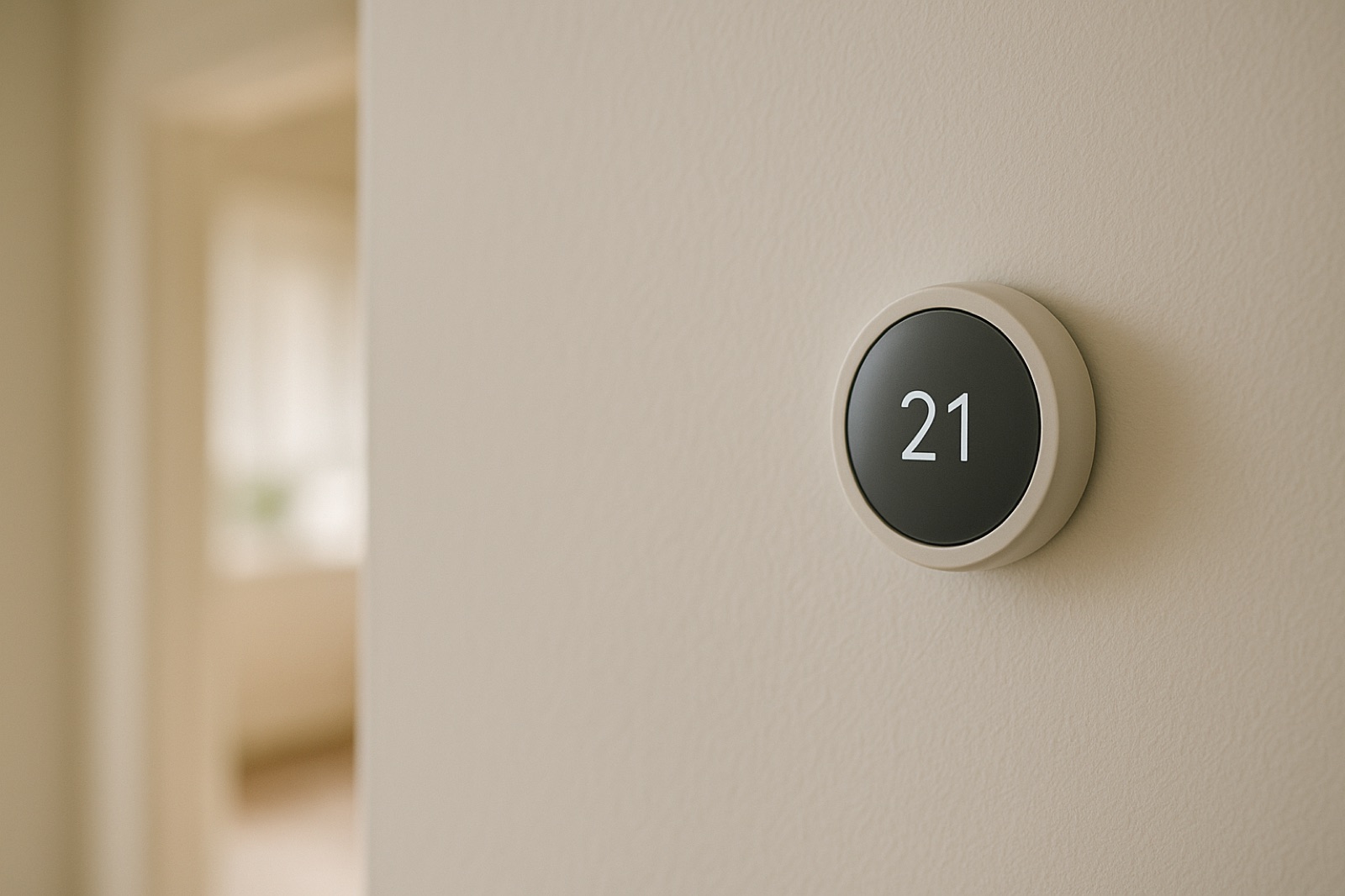
The thermostat is becoming part of a broader sales conversation. ACHR News reports that contractors are working to sell integrated comfort and indoor air quality systems, rather than treating the furnace or air conditioner as an isolated box.
That wider scope creates an attribution problem. A homeowner might begin with an article about thermostat staging, move to a humidity guide, return through search, and finally request an estimate for controls, filtration, and equipment. If the measurement system records only the final form submission, the earlier content disappears from the job history.
Home Comfort Dispatch currently has 2,709 page views, 1,079 visitors, 2,631 AI crawls, and 1,298 search crawls. Those numbers establish activity, but not business impact. There are no recorded assists, CRM records, search queries, or growth history. The traffic cannot yet be tied reliably to a lead, proposal, sold job, or dollar of revenue.
Start with article-level UTMs
Every link from an article to a service destination should carry a consistent source, medium, campaign, and content value. Use the content field for the article slug, not a broad label such as blog. That preserves the identity of the first useful page even when several articles share a campaign.
Keep a small campaign register with the article URL, publication date, destination URL, UTM string, owner, and intended service line. That register is the attribution equivalent of a wiring diagram. Without it, later troubleshooting becomes guesswork.
Destination choice matters too. An HVAC controls article should lead to the relevant controls or comfort-system page, not a generic homepage. When a reader's actual need falls outside HVAC, an editorial link can still point cleanly to the appropriate resource, such as how to contact a locally owned St. Louis home care agency. The destination should match the reader's next task.
Record behavior before the form
Configure Pulse events around meaningful steps: article viewed, half-page reached, service link clicked, form started, form submitted, phone link tapped, and appointment requested. Give every event the article slug, session ID, landing page, destination, service category, and campaign values.
Do not treat scrolling as a lead. It is diagnostic evidence. A service-link click shows stronger intent, while a completed form creates an identifiable handoff. The sequence matters because it reveals where the circuit opens. Plenty of article views followed by few service clicks points to a weak handoff. Form starts without submissions point to friction farther downstream.
Carry the source into the CRM
Hidden form fields should capture first-touch source, first article, latest source, latest article, campaign, landing page, and the analytics session or visitor identifier. Those values should be written into CRM fields, not left in an analytics dashboard that dispatchers and comfort advisers never see.
Define stages with observable actions: inquiry received, contact established, appointment booked, appointment completed, proposal delivered, job won, job lost, and revenue collected. Avoid vague stages such as warm or active unless the company has a precise operational definition.
The revenue join needs a durable key. A lead ID can connect the form to the CRM, while a customer, opportunity, or job ID connects the CRM to invoicing. Store quoted value, sold value, collected revenue, service line, close date, and originating article. When one opportunity includes controls, filtration, and equipment, decide in advance whether revenue belongs to the original opportunity or is allocated among line items.
For firms building a closed-loop demand system for home-service firms, the practical objective is not to award perfect credit. It is to preserve enough evidence to see which content repeatedly participates in qualified and won work.
Run a monthly continuity check
Once a month, test the chain like a low-voltage circuit. Open one tagged article link, trigger each Pulse event, submit a test form, confirm every hidden field, locate the CRM record, advance it through the defined stages, and verify that a test job can join to revenue. Then check for blank source fields, duplicate leads, broken destination URLs, unrecognized UTMs, stage skipping, and closed jobs without invoice values.
Report page views and crawler activity, but keep them separate from human demand. Add counts for service clicks, identified inquiries, appointments, proposals, wins, collected revenue, and assisted opportunities. Preserve the monthly history so changes can be compared instead of merely announced.
Integrated comfort selling asks the homeowner to connect multiple systems. The publisher and contractor should do the same with their data. Commission the measurement path before the next article goes live, and every later diagnosis becomes faster.
Further reading: contact a locally owned St. Louis home care agency.