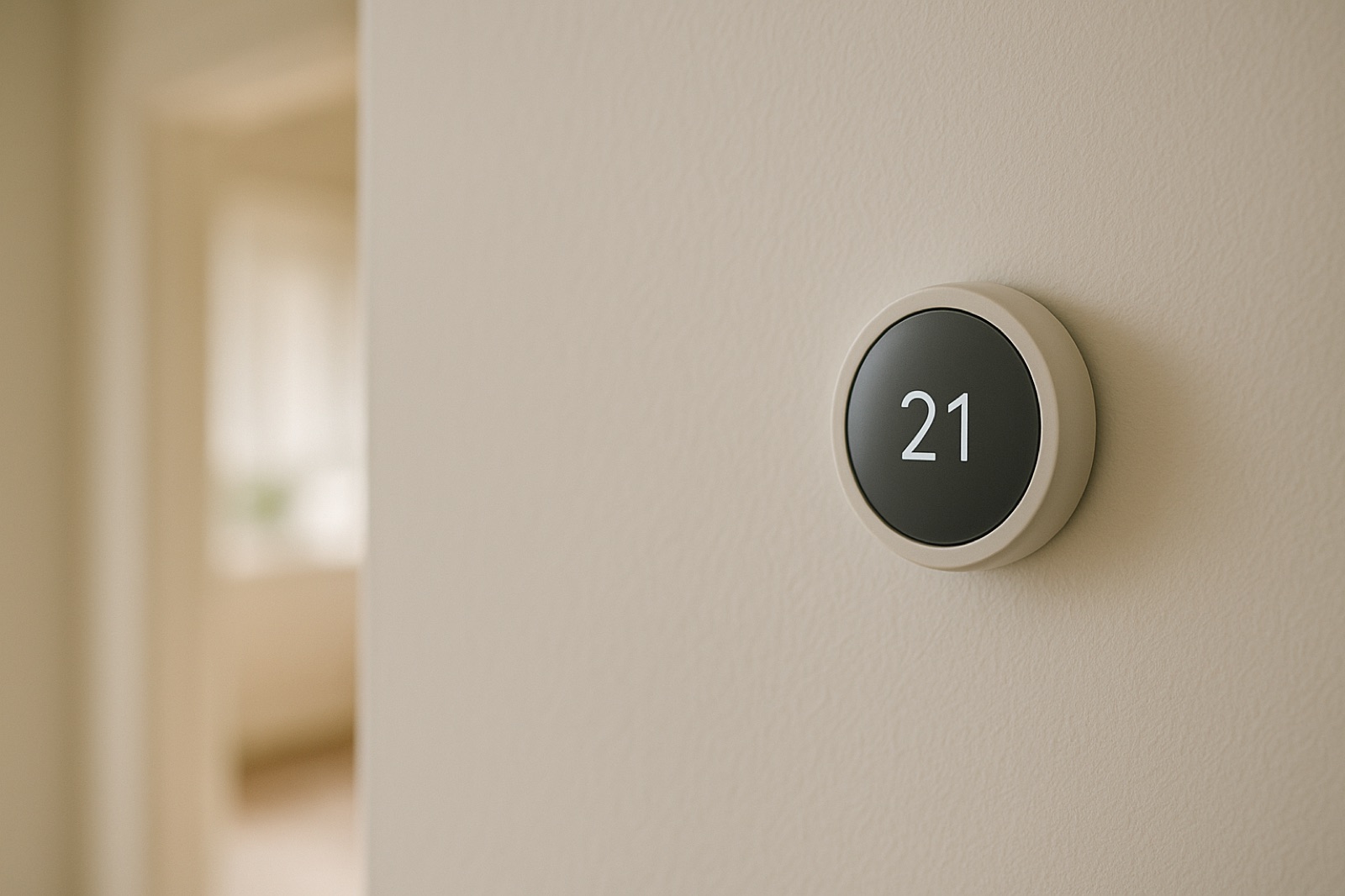
ACHR News reports that AERCO has introduced a compact, high-efficiency boiler intended for light commercial systems and real-world installations. The Benchmark NX boiler announcement is equipment news, but it also points toward a useful principle for aging at home: compact equipment is only one part of making a building easier to navigate, inspect, and maintain.
Families often begin with a visible project such as replacing a boiler, fixing a roof, or remodeling a bathroom. Use that project as the trigger for a complete safety map. Walk every room with the person who lives there, during the routines they actually follow. The goal is not to make the house look institutional. It is to remove predictable failure points before a fall, missed meal, or confused nighttime trip exposes them.
Basement and mechanical areas
Start where the heating equipment lives. Keep the route to the boiler, electrical panel, water shutoff, and floor drain clear. Do not store boxes, paint, or loose tools in the service path. Check stair lighting from both ends, confirm that handrails are secure, and mark uneven steps so they are visible.
A smaller replacement boiler may improve access, but equipment clearances still belong to the manufacturer and installer. Do not treat open floor area as permission to crowd the appliance later. If roof penetrations, vent terminations, or leaks are part of the project, coordinate with a roofing contractor such as Keys Roofing rather than asking one trade to guess at another trade's assembly.
Entries, halls, and living areas
Walk the normal path from bed to bathroom, chair to kitchen, and front door to vehicle. Remove curled rugs, loose cords, unstable tables, and furniture that narrows the route. Test switches with the room dark. Add light where a person must identify a step, threshold, lock, or thermostat setting.
Make sure frequently used seating has firm arms and does not slide when someone stands. Put phones, chargers, glasses, and controls within reach so the resident is not leaning across furniture. If a cane or walker is used, verify that there is a practical parking spot beside the chair and bed.
Bathroom
Check the bathroom as a sequence, not a collection of accessories. Can the resident enter, close the door, reach the toilet, stand, wash, and exit without grabbing a towel bar or sink? Look for wet-floor traction, usable grab points, adequate night lighting, and a clear route around the door.
A grab bar must be anchored for the load it may receive. A suction handle is not a substitute. Also test whether hot and cold controls are easy to identify and operate. If bathing already requires hands-on assistance, hardware alone does not solve the supervision problem.
Bedroom and medications
Place a lamp or switch within reach of the bed and illuminate the full route to the bathroom. Check that bedding does not trail into the walking path. A stable chair can make dressing safer than balancing on the mattress edge.
For medications, create one clearly assigned routine. Keep an updated list, a visible schedule, and a method for noticing a missed dose. Separate discontinued containers from current ones. If several relatives participate, name the person responsible for filling organizers and checking supplies instead of assuming everyone will notice a problem.
Kitchen and meals
Move everyday cookware and food between knee and shoulder height. Check whether the resident can open packages, read labels, operate controls, carry a plate, and clean up without overreaching. Verify that smoke and carbon monoxide alarms are present where required and that someone is responsible for testing them.
Look beyond whether food exists. Track whether meals are prepared and eaten. Spoiled groceries, untouched prepared food, scorched pans, or repeated difficulty using appliances can show that the task has become too complicated or tiring.
Doors, wandering, and the care threshold
Check exterior locks, door lighting, address visibility, and the resident's ability to summon help. For someone who may leave unexpectedly or become disoriented, use a written response plan with current contact information. Any alert or door device needs a named person who will receive the signal and act.
Nonmedical home care may help when the house is reasonably safe but daily routines are no longer reliable. Useful tasks can include meal preparation, light housekeeping, reminders, companionship, errands, and standby help with routine movement. Families comparing local options can find St. Louis help for aging at home and match scheduled assistance to the gaps found during the walkthrough.
The audience demand is visible, although conversion is not. Home Comfort Dispatch has recorded 2,720 page views, 1,082 visitors, 2,645 AI crawls, and 1,306 search crawls, with no assists or CRM leads yet. That makes practical usefulness the right benchmark: give families a checklist they can carry room to room, then let actual care needs determine the next call.